Print design and
screen design has many major differences when compared.
Referring to Bear (n.d),
one of his comparison between the both is with its typography. Print may use a
font that is good for its paper but on the web, it may not be the case. The below pictures are examples to illustrate
the differences. As we can see the newspaper typography has more than 20 fonts
in just one page; this is to show the different headlines of the news.
Typography of
newspaper

Typography of web
blogs
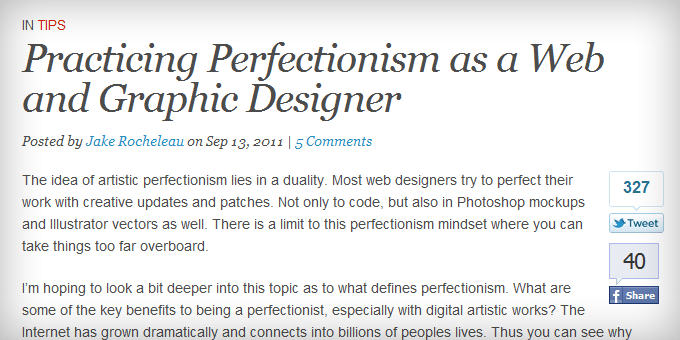
The web blog on the hand has only 3 which is more static; this is because some fonts that are used by the author may be readable to some readers as they do not have the software installed or the browser does not allow such fonts.
Referring to Nielson (1999), his comparison of the both is
Dimensionality. Print design has a 2-dimensional layout which brings out focus
to the readers. Readers can just flip
the page, however this has made the interaction between the spreads of another
page is hard to reach. In distinction, the web layout is a simultaneously
1-dimensional and N-dimensional layout. Instead of flipping through, web
proposes the scrolling experience for the user. N-dimensional is whereby the
web design coherently follows the hypertext navigation. An example below shows
the navigation of the cursor in web design which cannot be found in print
designs.
Navigation through blog interface websites

source: http://designgenies.com/blog/
Overall, I think it
is easier to read with print design due to less graphic structures which can be found
in the web design. According to Nielson (1999), he states that print design has
bigger impact to readers compared to web design due to its whole double paged
spread. Hence, reading with print design gives the readers more of an emotion
to readers. However, reading through the web maybe very informational but due
to its design, some images may cause a lag or unable to load the page which
will affect the reader to find another source of information.
References
Nielsen, J 1999, 'Print vs.web design' viewed 7 April 2012, < http://www.useit.com/alertbox/990124.html>.
Bear, J. H. n.d, 'Print Design vs. Web Design: Similarities
and Differences in Print and Web Design', The New York Times Company, New
York, viewed 8 April 2012, < http://desktoppub.about.com/od/transitionprintweb/tp/Print_Design_vs_Web_Design.htm>.


